

imx METIS for EC/BLDC-Motors
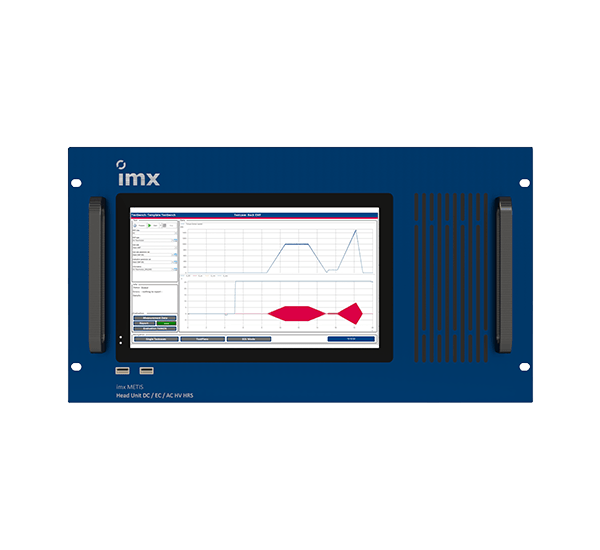
imx METIS for permanently excited synchronous motors (BLDC/EC motors) combines modular hardware, intelligent test bench software, and model-based test methods in one integrated electric motor testing platform.
The Head Unit handles measurement data acquisition and test sequence control, while the Control Unit provides the required control electronics and motor controllers for precise dynamic excitation of the motor under test. A safety PLC and power supply components complete the system.
The software platform is based on imx OMEGA, providing test control, automation, data acquisition, and analysis. Integrated into imx OMEGA, imx PI (Parameter Identification) enables model-based identification of relevant motor characteristics and parameters – fast, reproducible, and without the need for a mechanical load machine.
All components are combined into a fully integrated, ready-to-operate imx METIS test system.
Outstanding Features
High test speed
Seconds to minutes – even for drives rated at several hundred kilowatts.
Fully automated testing
Fast system integration and straightforward test execution.
System integration
Various interfaces including CSV export, REST API, and more.
Data Traceability
Raw data, test results, and metadata are stored consistently and traceably.
Reporting
Export metadata and measurement results to PDF at the touch of a button.
Expandability
Can be extended with additional test methods such as NVH, HV, and insulation testing.
Deep testing of permanent-magnet synchronous motors
imx OMEGA EC-PI for permanent-magnet synchronous motors
imx Parameter Identification is a model-based, fully automated test method for determining the physical parameters and characteristics of an electric motor – Deep Testing.
Instead of mechanically loading and measuring the motor at numerous operating points, imx EC-PI precisely measures current, voltage, and rotor angle during dynamic excitation of the motor under test.
Mathematical optimization methods are used to identify the motor model parameters from the acquired measurement data. These primary parameters are immediately available for motor assessment and are used to derive additional motor characteristics, as shown below.
Permanent-magnet synchronous motors are tested using the motor controller integrated into imx METIS as standard. A one-time setup of each motor type is sufficient to perform all subsequent tests fully automatically. At the beginning of each test, the individual rotor position is determined to ensure correct motor commutation. At the same time, the encoder offset is identified and can be stored for further processing if required.
Testing requires only the motor under test and a speed or rotor angle signal, provided either by the motor itself or by an external sensor. No additional load machine or mechanical brake is required.
A universal motor controller is used as standard. If required, the test method can also be implemented using the customer’s own motor controller.
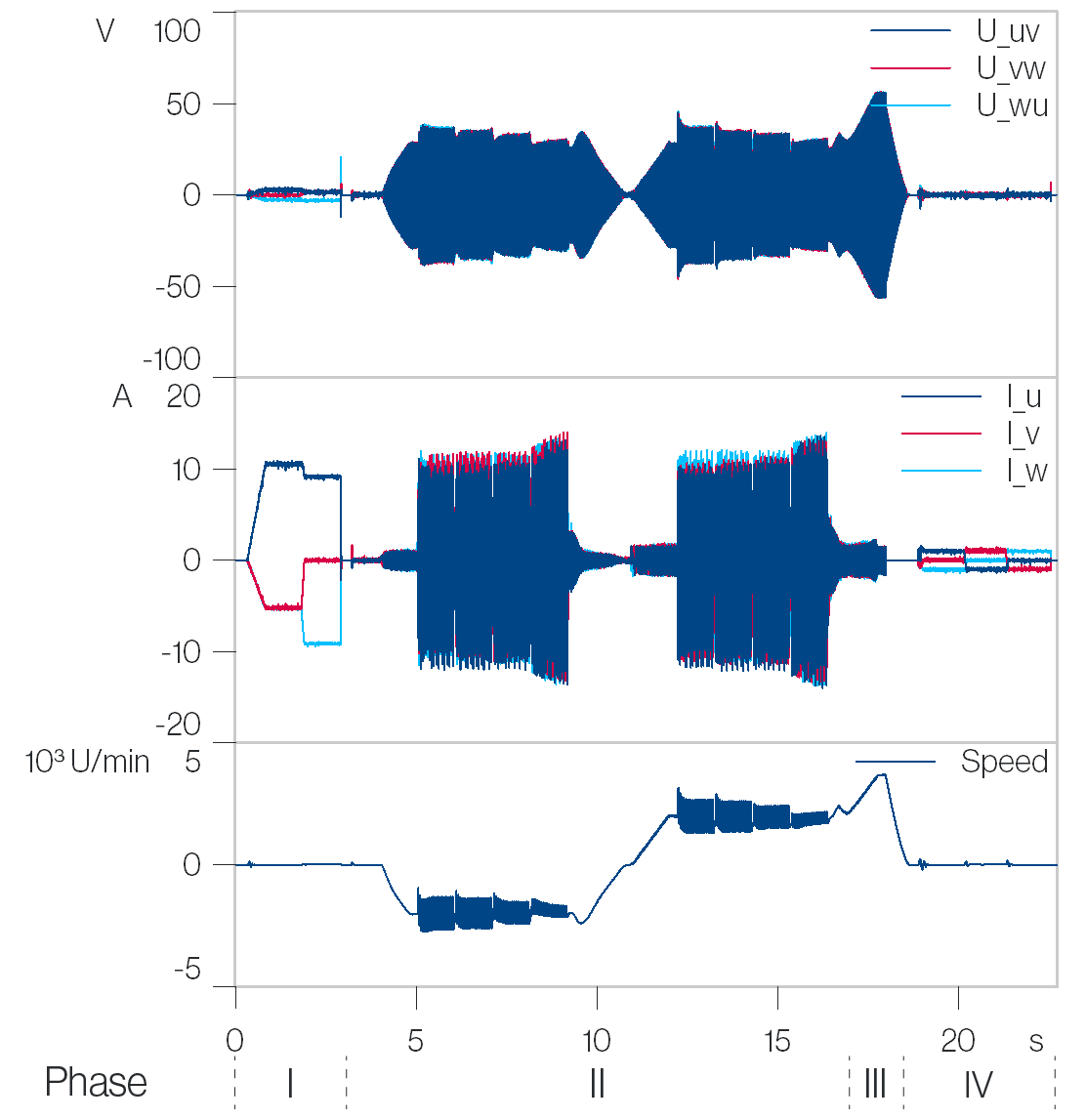
Test sequence
-
Phase I
Assessment of the angle sensor quality and determination of the encoder offset. For integrated sensors, this is performed automatically; for external sensors, the angle offset is determined during the initial setup -
Phase II
Dynamic excitation is used to determine inductances, magnetic flux characteristics, and the moment of inertia -
Phase III
Coast-down from no-load speed to determine the friction parameters -
Phase IV
Application of a constant DC current to determine the winding resistances
Primary test results
- Individual phase resistances
- Excitation flux
- Back-EMF spectrum and back-EMF constant
- d- and q-axis inductances (Ld and Lq), including saturation and cross-coupling based on a nonlinear flux model
- Encoder offset of absolute encoders
- For resolvers and Sin/Cos encoders: offset and amplitude, transformation ratio, phase shift, and signal spectrum
- Sliding and static friction
- Moment of inertia
Derived motor characteristics
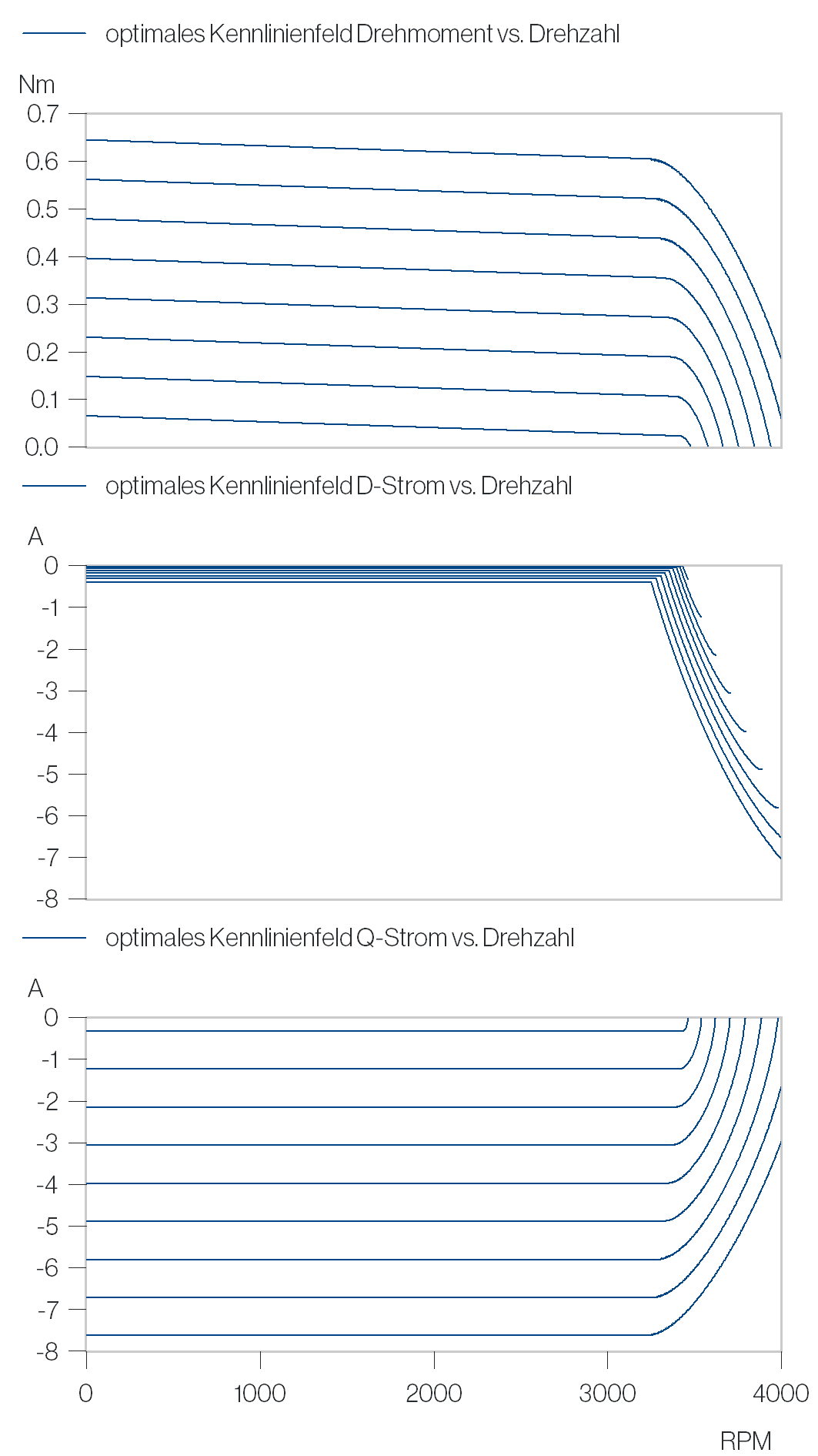
- Optimized characteristic curves
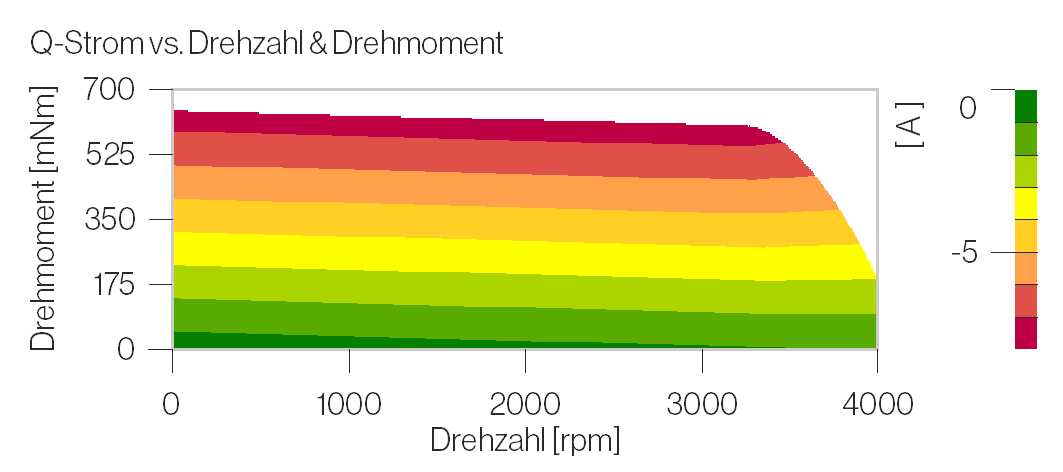
- Operating maps with optimal d- and q-axis currents
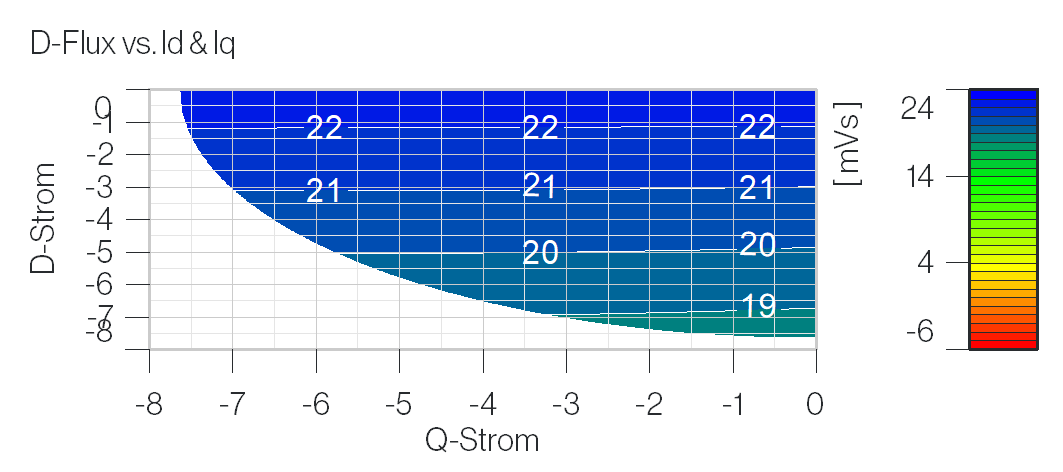
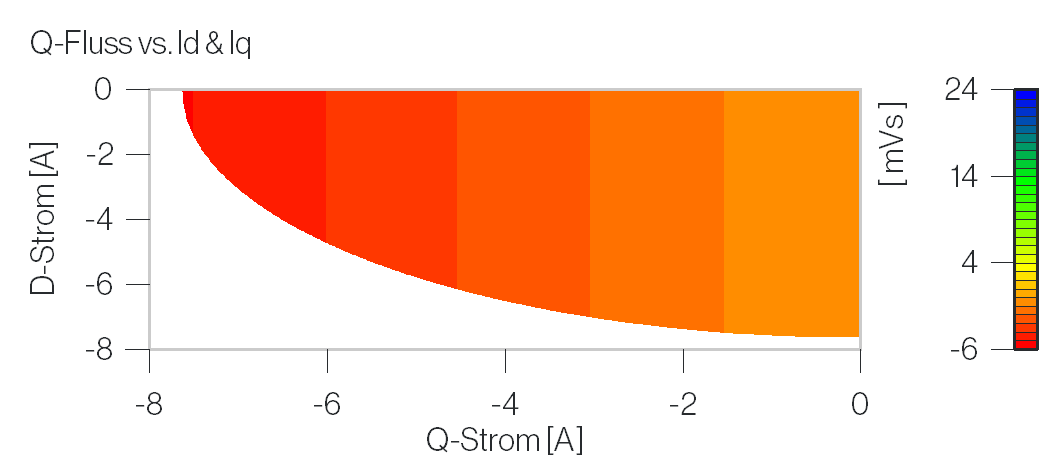
- d- and q-axis flux as a function of d- and q-axis current
- Internal torque
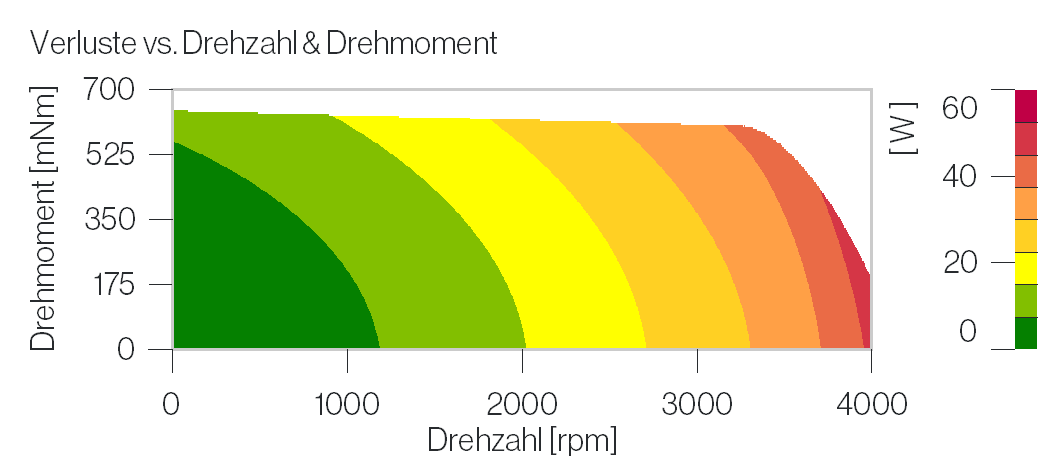
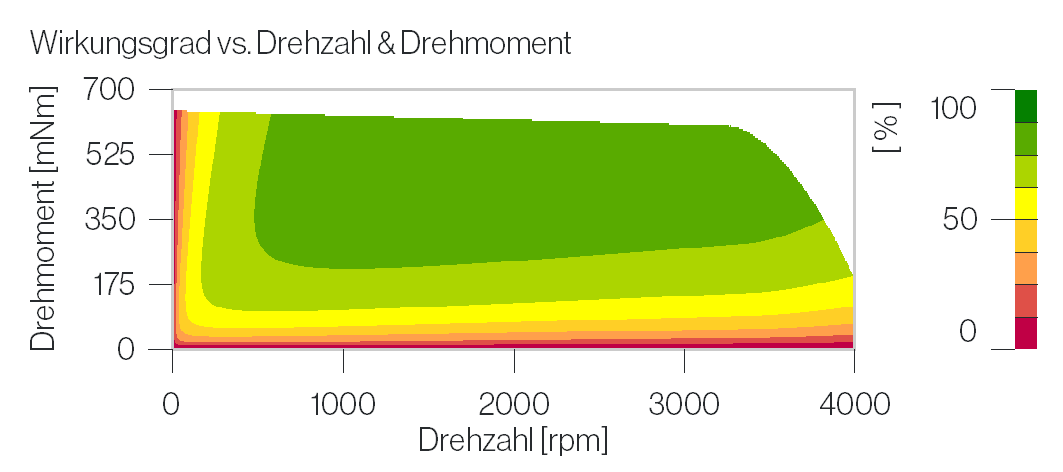
- Operating maps for ohmic, friction, and total losses
- Power and efficiency maps
- Various motor quality indicators
Fault detection
imx OMEGA EC-PI detects a wide range of motor-specific faults, including bearing defects, magnetization faults, winding faults, and encoder errors. Deviations in the magnetic properties or geometry of the lamination stack as well as air-gap irregularities can also be identified from the measured and calculated parameters.
The identified parameters provide a comprehensive picture of the motor and form the basis for reliable motor quality assessment. Combined with short test cycles and load-free motor testing, imx EC-PI is particularly suitable for production testing, end-of-line testing (EOL), incoming goods inspection, and quality assurance.