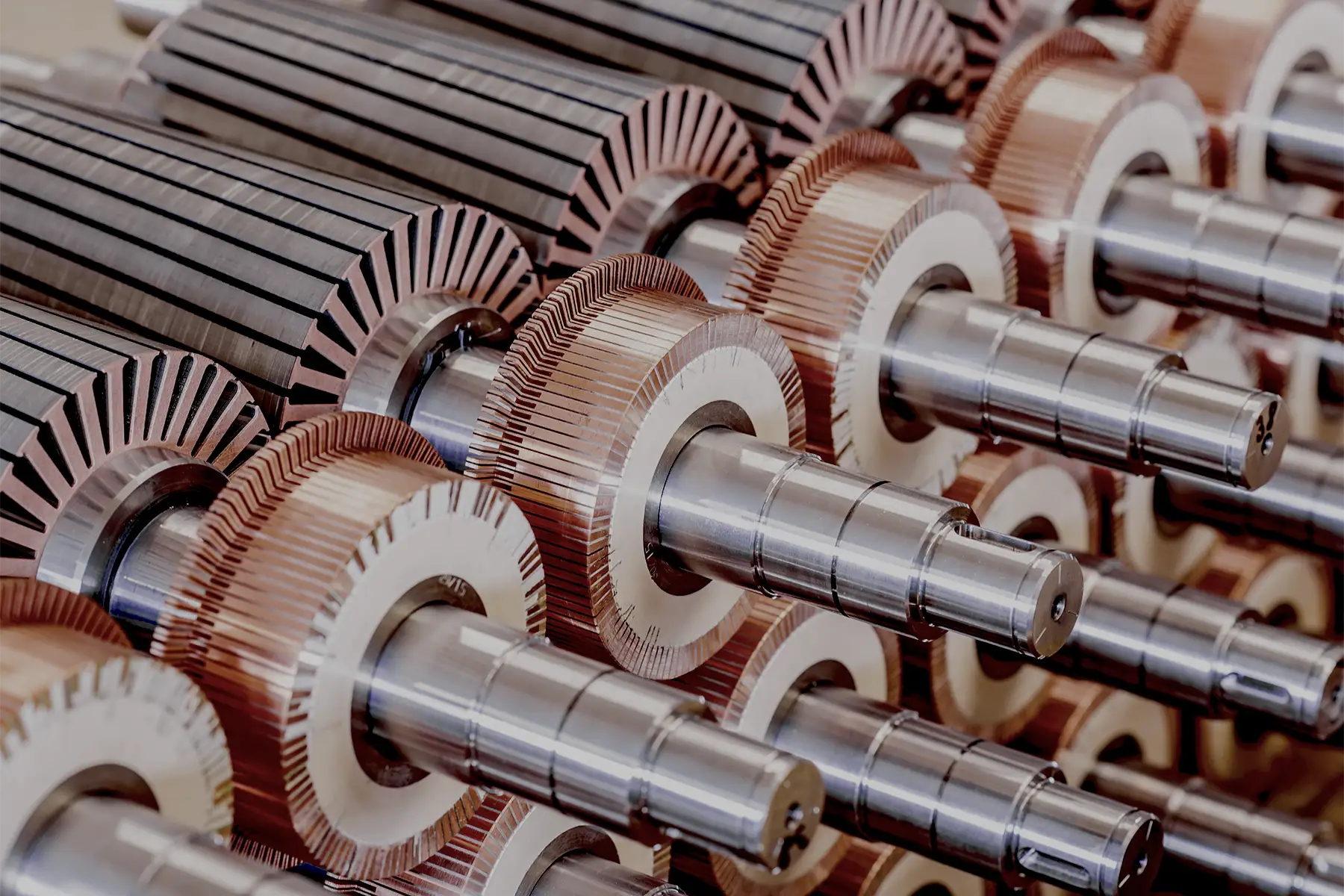


imx METIS for DC-Motors
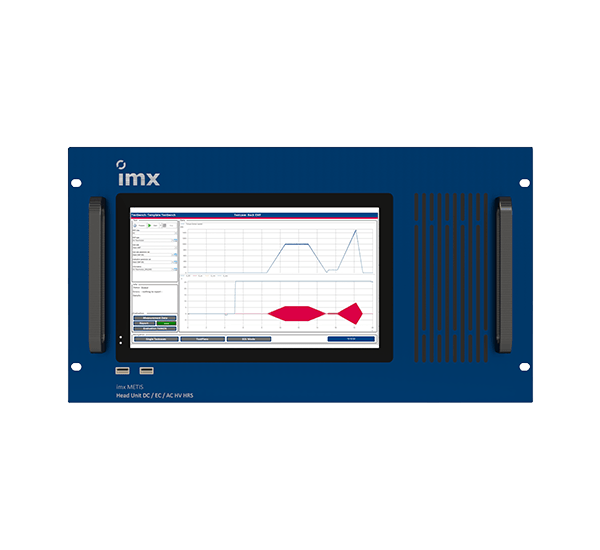
imx METIS for DC motors combines modular hardware, intelligent test bench software, and model-based test methods in one integrated electric motor testing platform.
The Head Unit handles measurement data acquisition and test sequence control, while the Control Unit provides the required control electronics and motor controllers for precise dynamic excitation of the motor under test. A safety PLC and power supply components complete the system.
The software platform is based on imx OMEGA, providing test control, automation, data acquisition, and analysis. Integrated into imx OMEGA, imx PI (Parameter Identification) enables model-based identification of relevant motor characteristics and parameters – fast, reproducible, and without the need for a mechanical load machine.
All components are combined into a fully integrated, ready-to-operate imx METIS test system.
Outstanding Features
High test speed
Seconds to minutes – even for drives rated at several hundred kilowatts.
Fully automated testing
Fast system integration and straightforward test execution.
System integration
Various interfaces including CSV export, REST API, and more.
Data Traceability
Raw data, test results, and metadata are stored consistently and traceably.
Reporting
Export metadata and measurement results to PDF at the touch of a button.
Expandability
Can be extended with additional test methods such as NVH, HV, and insulation testing.
Deep testing of brushed DC motors
imx OMEGA DC-PI for brushed DC motors
imx OMEGA Parameter Identification is a model-based, fully automated test method for determining the physical parameters and characteristics of an electric motor – Deep Testing.
Instead of mechanically loading and measuring the motor at numerous operating points, imx DC-PI measures current and voltage during a precisely controlled dynamic excitation of the motor under test.
Mathematical optimization methods are used to identify the motor model parameters from the acquired measurement data. These primary parameters are immediately available for motor assessment. Secondary characteristics such as starting torque, starting current, rated operating points, and the point of maximum efficiency are then derived from these parameters. Based on the identified motor parameters, the complete characteristic curves can be calculated for a selectable operating voltage.
imx OMEGA DC-PI, the Parameter Identification method for brushed DC motors, offers a particular advantage: motor speed and angular position are not measured using external sensors but are derived directly from the motor current signals. The characteristic behavior of the commutator is actively incorporated into the analysis.
For testing, the motor under test is mechanically fixed and electrically connected. Testing can then begin immediately. No prior motor teach-in or tuning procedure is required, as no encoder-based commutation is needed. A dedicated control unit provides the highly dynamic motor excitation. Its excitation parameters can be adapted to the specific motor type via the test configuration.
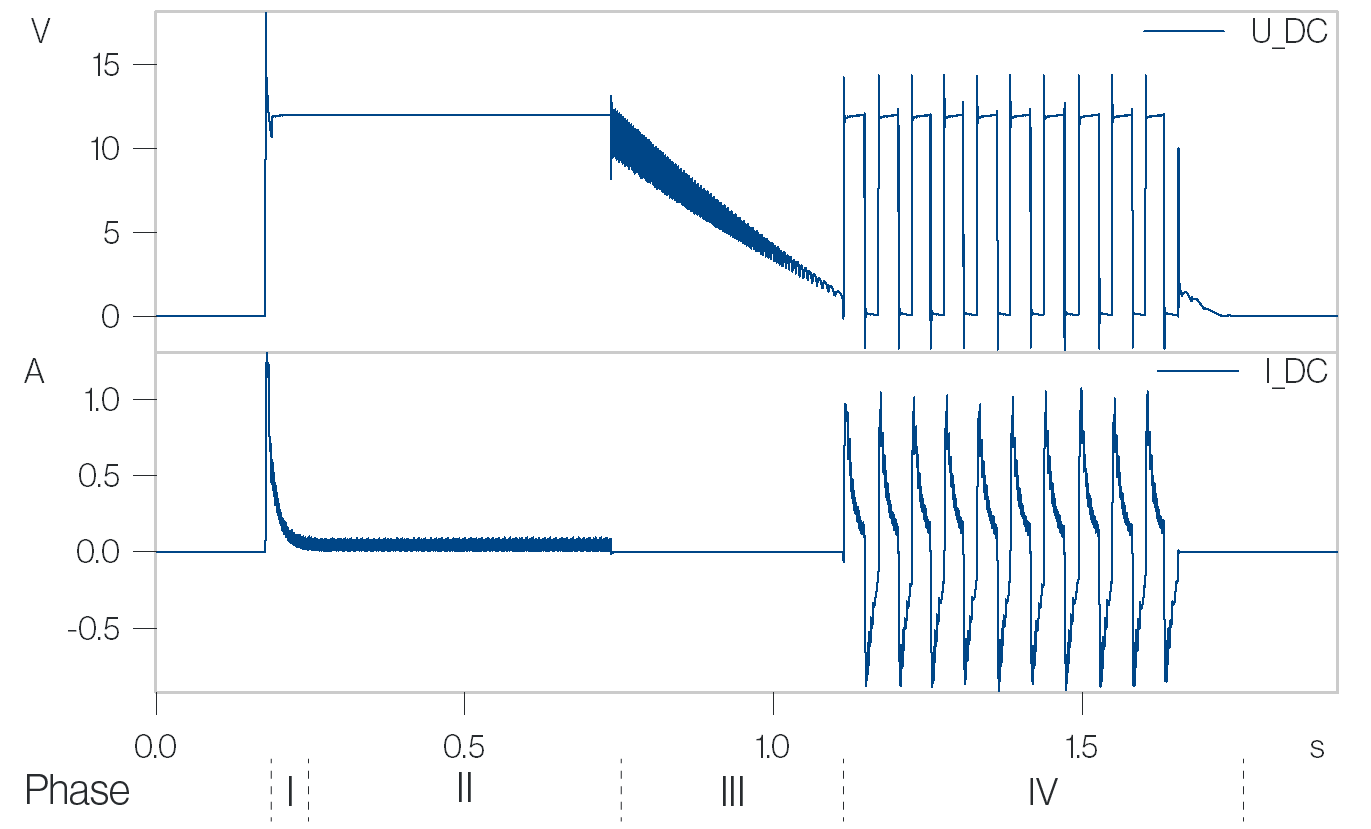
Test Sequence
-
Phase I
Determination of the starting current at the selected test voltage -
Phase II
Determination of the no-load speed -
Phase III
Coast-down from no-load speed to determine friction parameters and commutator characteristics -
Phase IV
Determination of operating and braking current limits
Primary test results
- No-load speed
- No-load current
- Winding inductance
- Winding resistance
- Sliding and static friction
- Moment of inertia
Derived Motor Characteristics
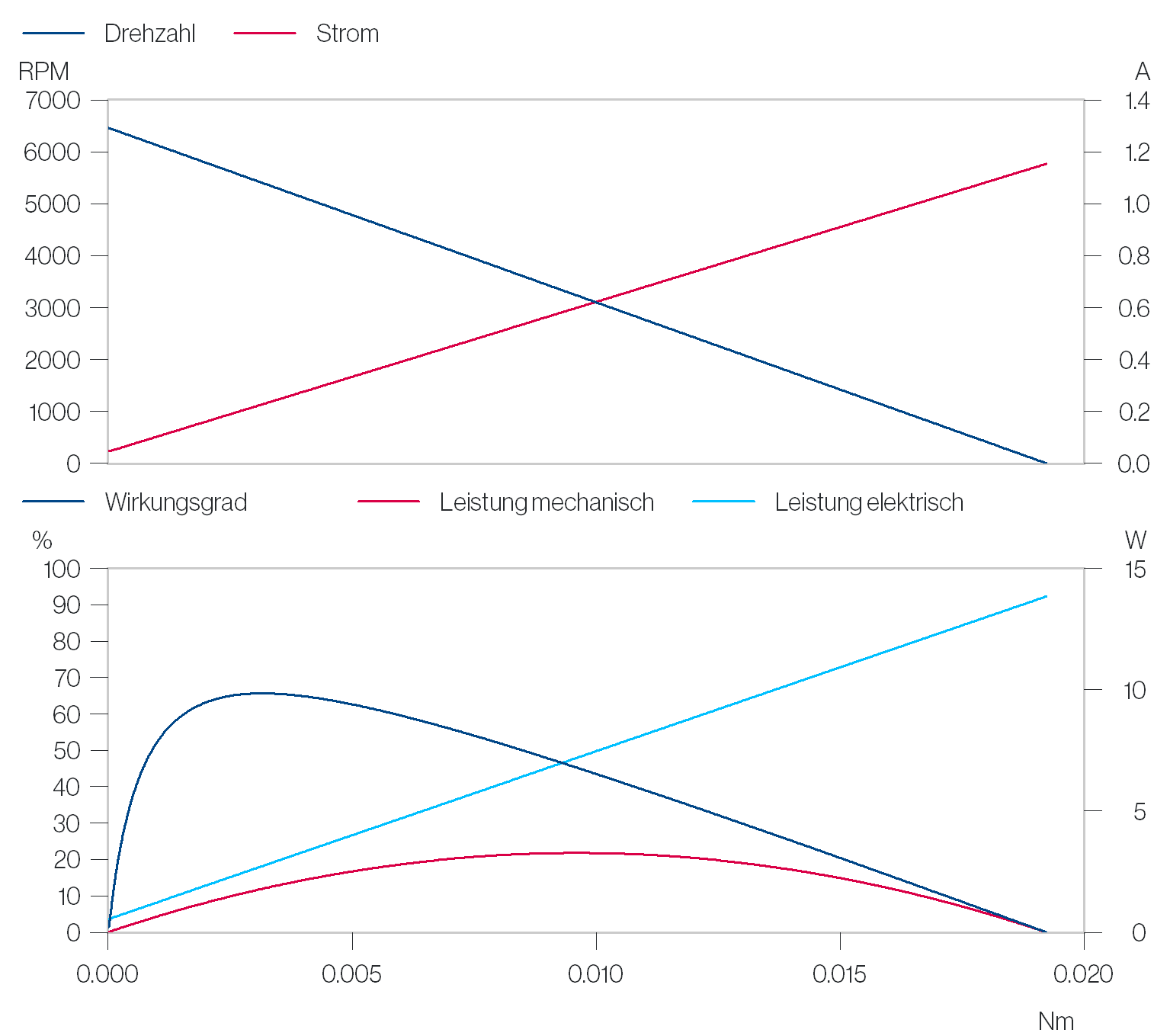
- Complete characteristic curves for current, speed, efficiency, electrical power, and mechanical power versus torque
- Friction constants
- Back-EMF constant
- Torque constant
- Additional derived motor parameters
Fault detection
imx OMEGA DC-PI detects motor-specific faults such as bearing defects, magnetization errors, winding faults, and commutator defects.
The identified parameters provide a comprehensive picture of the motor and form the basis for reliable motor quality assessment – making imx DC-PI particularly suitable for production testing, end-of-line testing (EOL), and quality assurance.